
Discover Jawai stargazing, the best time for night photography, clear skies, astronomy experiences, nearby wildlife and things to do in Jawai after sunset.
Jawai Stargazing: Experience Rajasthan Under a Sky Full of Stars
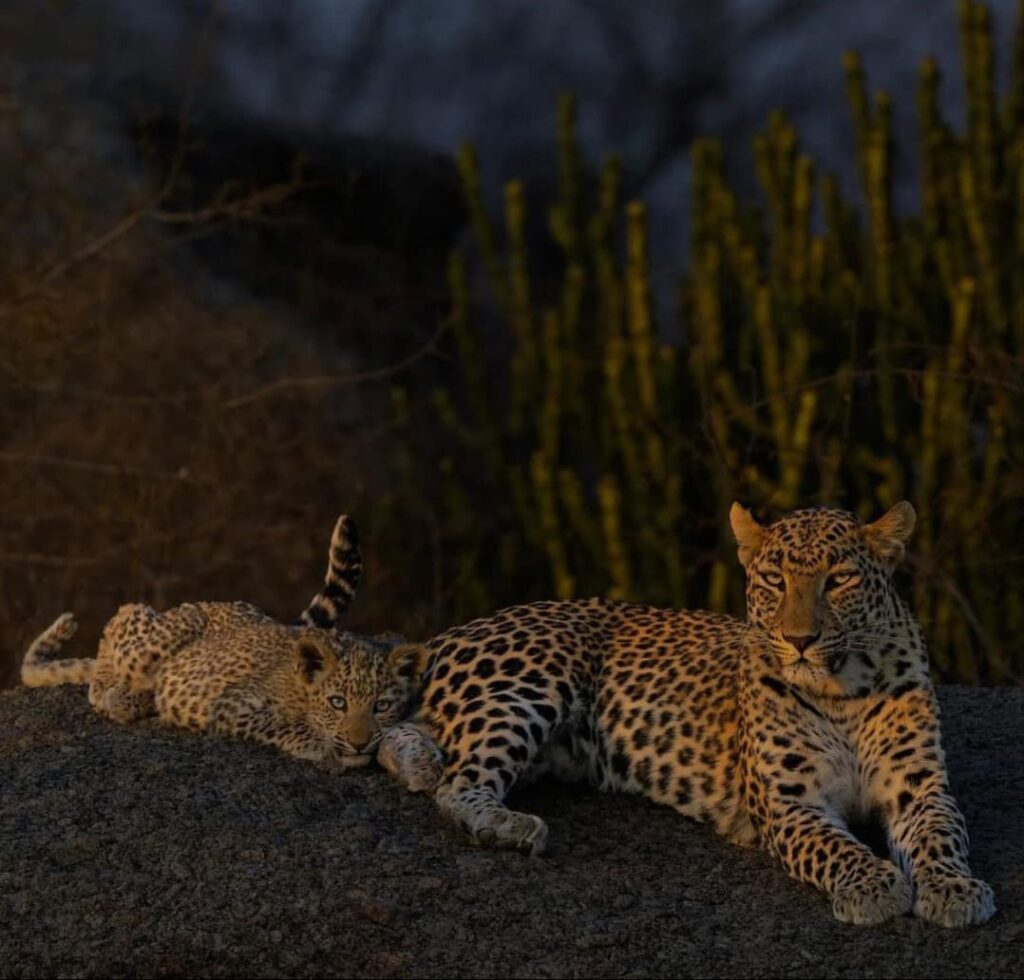
When most people think about Jawai, they imagine leopards walking across granite hills, birds around Jawai Dam and beautiful Rajasthan sunsets.
But there is another side of Jawai that becomes visible after dark.
The Jawai night sky can offer a peaceful experience away from the bright lights and busy streets of large cities. Surrounded by rocky hills and rural landscapes, Jawai can be a wonderful place to slow down, look upwards and enjoy the stars.
For travelers who love nature, photography and quiet experiences, Jawai stargazing can be a memorable addition to a wildlife-focused holiday.
And the best part is that you don’t need to be an astronomy expert.
Sometimes, simply sitting outside on a clear night and watching the sky is enough.
Why Is Jawai Good for Stargazing?
One of the attractions of staying in a rural destination like Jawai is the opportunity to experience a quieter night environment.
Away from major urban centres, there can be less artificial light, making the night sky more enjoyable when weather and moon conditions are favourable.
The rocky hills surrounding Jawai also create an interesting foreground for night photography.
Imagine a granite hill silhouetted beneath a sky filled with stars.
Or a quiet landscape beneath the Milky Way.
These are the kinds of photographs that can make your Jawai trip different from a standard wildlife holiday.
Best Time for Jawai Stargazing
The best conditions for stargazing depend on several factors.
The most important are:
- Cloud cover
- Moon phase
- Atmospheric conditions
- Local light pollution
- Visibility
- Your location
A clear, darker night is generally better for seeing more stars.
If your main goal is photographing the Milky Way, checking the moon phase and astronomical conditions before your trip can make a big difference.
For general information about astronomical events and sky conditions, you can use the official NASA website as a reliable reference.
You can also check Time and Date’s astronomy calendar when planning your photography session.
Jawai Night Photography
Jawai is not only interesting during the day.
For photographers, the landscape can become a completely different subject after sunset.
Granite hills, trees, roads and buildings can become silhouettes against the night sky.
Try photographing:
- Stars above granite hills
- The Milky Way over Jawai’s landscape
- Star trails
- Moonlit rocks
- Rural landscapes
- Silhouettes
- Night landscapes
A tripod is one of the most useful pieces of equipment for night photography.
You will also need to keep the camera steady during longer exposures.
Camera Settings for Jawai Night Photography
There is no universal setting because every camera, lens and night condition is different.
However, you can start with something like:
Mode: Manual
Aperture: f/1.4–f/2.8 if available
Shutter speed: 10–20 seconds
ISO: 1600–6400
Focus: Manual focus
White balance: Around 3500–4500K as a starting point
Take a test photograph and adjust from there.
If the stars appear blurred because of Earth’s rotation, reduce the shutter speed.
If the photograph is too dark, increase ISO or use a wider aperture.
Most importantly, focus carefully on infinity or a distant bright object and check the image by zooming in.
Photograph the Milky Way Over Jawai
For many photographers, the Milky Way is the main reason to try night photography.
The most interesting photographs usually combine the sky with something recognizable in the foreground.
In Jawai, granite hills can provide a natural foreground.
Instead of photographing only the stars, try composing the image with:
Milky Way + Granite Hill + Landscape
This creates a stronger sense of place.
Your photograph doesn’t just show the night sky.
It shows the night sky above Jawai.
Stargazing and Wildlife: Two Different Experiences
Jawai is famous for its leopard safari, but wildlife viewing should not be confused with nighttime stargazing.
Leopard safaris should always be conducted according to current local rules and with experienced safari drivers or guides.
Do not attempt to search for wildlife independently at night.
Do not enter restricted areas.
Do not approach animals.
If you want to experience Jawai’s wildlife, book a proper safari through an authorized or reputable local operator and follow the current conservation regulations.
For your daytime wildlife experience, see our Leopard Safari in Jawai guide.
What to Do in Jawai Before Stargazing
You can easily combine stargazing with other Jawai experiences.
During the day, you could explore the region’s wildlife and landscape.
Morning
Start with a Jawai Safari and explore the rocky landscape.
Afternoon
Relax at your accommodation or explore the surrounding area.
Evening
Enjoy sunset and, if operating conditions allow, take an evening safari.
Night
After dinner, spend some quiet time outside and enjoy the night sky.
This creates a relaxed experience rather than trying to fit too many activities into one day.
Combine Stargazing With Birdwatching
Jawai isn’t only about leopards.
The wetlands and surrounding landscape are also interesting for bird lovers.
If you’re interested in nature photography, combine your trip with our Birds of Jawai | Bird Watching Jawai guide.
You can spend the morning looking for birds and the evening enjoying the landscape beneath the stars.
That combination is particularly attractive for photographers.
Jawai Sunset Before the Stars
Don’t rush indoors after sunset.
The period immediately after the sun disappears can be one of the most beautiful times to photograph the landscape.
The sky may transition through shades of orange, pink, purple and blue before becoming dark.
This period is sometimes called the blue hour.
Use this time to photograph the granite hills and surrounding landscape before switching to your night photography setup.
What Should You Carry for Stargazing?
You don’t need a huge amount of equipment.
Basic Equipment
- Camera
- Wide-angle lens
- Tripod
- Extra batteries
- Memory cards
- Headlamp or flashlight
- Warm clothing during cooler months
- Lens cleaning cloth
For Smartphone Photography
Modern smartphones can also capture surprisingly good night-sky photographs.
Use a stable tripod or surface, activate the phone’s night mode and avoid touching the phone during the exposure.
Don’t expect the same results as a dedicated camera, but smartphone night photography can still produce memorable travel images.
Stargazing With Family
Jawai stargazing isn’t only for professional photographers.
Families can also enjoy a simple night-sky experience.
Children who spend most of their time in cities may find it fascinating to identify the Moon, stars and visible constellations.
You can turn it into a simple activity:
“Can you find the brightest star?”
“Can you see the Moon?”
“How many stars can you count?”
You don’t need expensive astronomy equipment to make the experience enjoyable.
Stargazing for Couples
If you’re planning a romantic getaway, a quiet evening beneath the stars can be a beautiful addition to your Jawai trip.
After a day of wildlife experiences, sitting outdoors with a clear view of the sky can provide a peaceful break from a busy travel schedule.
If you’re planning accommodation in Jawai, you can also explore our Jawai Hotel and Stay Guide.
For a more specific accommodation option, you can consider Jawai Horizon Camp when planning your stay.
Stargazing During Monsoon
Monsoon can transform Jawai’s landscape, but cloudy conditions can make astronomy unpredictable.
You may get dramatic clouds and beautiful landscapes, but a cloudy sky can reduce visibility of stars.
If you’re travelling during the rainy season, don’t make stargazing your only planned activity.
Instead, combine it with wildlife, landscape photography and local experiences.
Read our Jawai Safari in Monsoon guide for more ideas.
Best Places to Enjoy the Jawai Night Sky
The ideal location depends on current conditions, accessibility and local rules.
Rather than searching for an isolated location yourself, ask your accommodation or local guide about safe areas where guests can enjoy the night sky.
Avoid entering wildlife areas after dark without authorization.
A good stargazing location should ideally have:
- Minimal artificial light
- A clear view of the sky
- Safe surroundings
- Easy access
- A suitable foreground for photography
Safety should always come before getting the perfect photograph.
Responsible Night Tourism in Jawai
Jawai is a wildlife landscape, so visitors should be especially careful after dark.
Avoid loud music, bright lights and unnecessary disturbance.
If you are outside at night:
- Keep noise low.
- Avoid shining powerful lights into the surrounding landscape.
- Don’t approach wildlife.
- Don’t enter restricted areas.
- Follow your accommodation’s safety instructions.
- Follow local forest and wildlife regulations.
The Rajasthan Forest Department is an important official source for information relating to wildlife and protected areas in Rajasthan.
A Perfect Jawai Experience: Wildlife by Day, Stars by Night
One of the best things about Jawai is that your experience doesn’t have to end when the safari vehicle returns.
During daylight, you can explore the rocky hills and search for wildlife.
You can watch birds around the wetlands.
You can photograph the landscape.
You can learn about local culture.
And when the sun goes down, you can slow down and look at the sky.
That combination makes Jawai more than simply a leopard safari destination.
It becomes a complete nature experience.
Frequently Asked Questions
Is Jawai good for stargazing?
Jawai’s rural landscape can provide enjoyable stargazing opportunities when skies are clear and artificial light is limited. Actual visibility depends on weather, moonlight and local conditions.
Can I see the Milky Way in Jawai?
The Milky Way may be visible under suitable conditions, particularly when the sky is clear and moonlight is limited. Visibility varies according to season, time and atmospheric conditions.
What is the best time for Jawai stargazing?
The best time depends on cloud cover, moon phase and your desired astronomical subject. Dark, clear nights are generally preferable for seeing more stars.
Do I need a telescope?
No. You can enjoy stargazing with your eyes alone. Binoculars can also enhance the experience, while a telescope is optional.
Can I do night photography in Jawai?
Yes, provided you photograph from a safe and permitted location. A tripod and wide-angle lens are particularly useful for night landscapes.
Is Jawai safe at night?
Visitors should follow their accommodation’s safety guidance and avoid entering wildlife areas or isolated locations without proper authorization.
Can I combine Jawai stargazing with a leopard safari?
Yes. You can enjoy a daytime or evening safari according to current operating schedules and then enjoy stargazing from a safe location afterward.
Plan Your Jawai Nature Experience
Jawai is often introduced to travelers through its famous leopards.
But stay a little longer and you discover something more.
You discover granite hills glowing at sunset.
You discover birds around the wetlands.
You discover local culture and rural landscapes.
And after dark, you may discover a sky filled with stars.
Jawai stargazing is a simple experience, but sometimes the simplest travel moments become the most memorable ones.
Explore More Jawai Guides
Complete Guide to Jawai Safari
Birds of Jawai | Bird Watching Jawai
Jawai Hotel | Hotels in Jawai
For astronomy and destination information, these authoritative resources can help:
Thông tin hữu ích quá. Letco tự hào là công ty tư vấn du học Hàn Quốc uy tín, cam kết đồng hành đến khi bạn nhập học thành công. Xem thêm tại letco.vn.